Choosing Stackable Storage for your business is not just a matter of finding containers that fit on a shelf. The right system can make stock easier to locate, protect goods during handling, and use vertical space more effectively. The wrong choice may create unstable piles, blocked aisles, or wasted room. Small details matter.
Start with what you store and how staff move it. Measure the items, shelving, doorways, and available floor space before comparing products. Consider each container’s load capacity, dimensions, material, and compatibility with other units. A box that stacks neatly when empty may behave differently when filled with tools, packaged goods, or heavier inventory. Check whether staff need lids, access labels, handholds, or open-front bins for frequent picking.
Your operating conditions matter, too. Dust, moisture, temperature changes, and repeated handling can affect which material is suitable. Ask suppliers for clear product specifications, weight limits, and guidance on safe stacking; verify that those details match your actual use. A small trial with representative goods can reveal awkward access or instability before a larger purchase. It may feel like an extra step. It often saves guesswork.
This guide explains how to compare Stackable Storage options by function, durability, safety, and cost over time. No single design suits every business, and a neat-looking stack is not proof of a good fit. Start with real measurements, then reassess after staff have used the system.
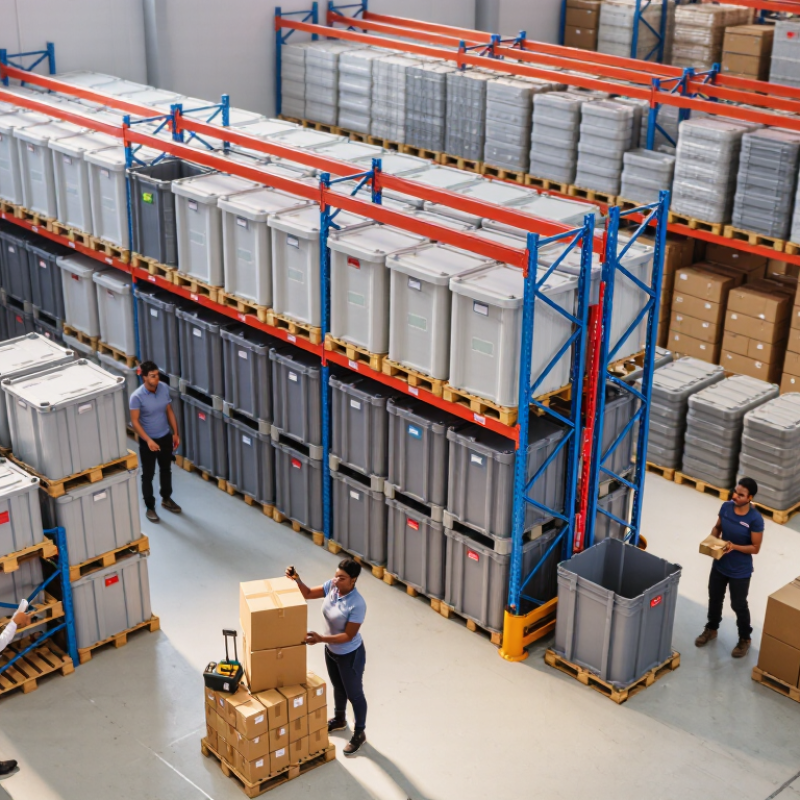
How to Choose Stackable Storage for Your Business?
Map SKU dimensions, weight, and turnover before selecting stackable storage. Record each item’s length, width, height, and loaded weight, including its container or packaging. Measure the largest realistic load, not just a typical one. Measure twice. A bulky, slow-moving carton may need a different stack height from a small, fast-moving tote. Note how often each SKU is picked and replenished; high-turnover goods need easy access, while reserve stock can use higher positions.
The 2023 MHI Annual Industry Report, produced with Deloitte, found that 87% of surveyed supply-chain professionals planned to invest in supply-chain technology over the following five years. Better SKU records support those decisions, but a spreadsheet is only useful when staff keep it current. Do not guess. Compare the loaded weight and footprint with the storage system’s stated capacity, and leave room for safe handling. OSHA’s materials-handling rule, 29 CFR 1910.176(b), requires stored materials to remain stable and secure against sliding or collapse. A practical layout may still need adjustment: cartons vary, and turnover changes. Test a sample bay with actual stock before rolling the setup across the facility.
Choose stackable storage by its actual outside footprint, not its advertised nominal size. The GMA pallet measures 48 × 40 in., a practical planning grid rather than a guarantee that every container fits. GS1 US logistics guidance identifies 48 × 40 in. as a standard pallet footprint. A 24 × 20 in. module tiles four per pallet, before handling clearance. Measure the outside. Include lips, handles, and any bulge under load.
MHI’s 2024 Annual Industry Report found that 55% of surveyed supply-chain professionals planned to increase technology investment. That figure is not a storage-fit study, but it highlights the value of adaptable layouts. Test a loaded sample on the pallet. Check edge overhang, fork access, label visibility, and whether stacked units stay stable during turns. Measure against rack beams and door openings, too.
Leave a small working gap when people need to grip or remove bins. A perfectly tight layout can look efficient on paper and feel awkward on a busy shift. Verify stack-load ratings against the technical sheet; empty-container ratings may not reflect repeated, loaded use. Dimensions vary by design and load, so record the real footprint before ordering. A little doubt helps.
Set stack height by the lowest rated limit in the full load path: container, pallet, rack beam, or floor. Check the load label, then account for the actual contents. A dense box of metal parts may weigh more than a larger carton of foam. Leave out damaged pallets and uneven cartons. Small gaps matter.
OSHA 29 CFR 1910.176(b) requires stored materials to remain stable and secure against sliding or collapse; it does not prescribe one universal stack-height limit. OSHA’s 1910.159(c)(10)(iii) generally requires at least 18 inches of clearance below sprinkler deflectors. FM Global Data Sheet 8-9 also assesses storage limits by commodity, packaging, and fire-protection design, so a height suitable for one product may not suit another. Mark the approved height at the storage bay, and recheck it when product weights or packaging change. A tidy stack can still be overloaded. Even a written limit deserves a second look when cartons bulge, pallets sag, or loads shift during handling.
ASTM D5276 uses free-fall drops to assess how a loaded container responds to handling impacts. For stackable storage, test the container with a realistic load, not just an empty shell. Record the load weight, drop height, impact surface, and which face or corner strikes first. These details make comparisons more useful.
Look for split corners, cracked walls, lids that pop open, and bases that no longer sit flat. Small details matter. A container may survive one drop yet become awkward to stack after its rim bends.
Use the same setup for each sample, and document damage with photos and notes. ASTM D5276 does not, by itself, guarantee that a product will withstand every warehouse condition. It also evaluates a test setup, not years of repeated use.
That limitation is easy to overlook. If your containers face different loads or handling methods, test those conditions separately and keep the results with your purchasing records.
How to Choose Stackable Storage for Your Business?
Before choosing stackable storage, compare its loaded dimensions and weight with your forklift’s rated capacity. OSHA 29 CFR 1910.178(o) requires stable, safely arranged loads and prohibits exceeding truck capacity. OSHA also requires capacity information on the truck’s data plate. Check the plate. Attachments can change a forklift’s capacity, so confirm the rating with the manufacturer or a qualified equipment professional before using a different bin or handling attachment. OSHA safety materials cite estimates of about 85 forklift-related fatalities and 34,900 serious injuries each year. Those figures make small handling mismatches worth taking seriously.
Check how the forks enter the base, whether the load stays centered, and if the operator can see the travel path. A stackable unit may be rated for storage but still prove awkward on a forklift. Test a fully loaded sample at low height, on a level floor, and with the actual forks or attachment. OSHA’s §1910.178(l) also requires operators to be trained and evaluated for the equipment and workplace conditions they use. A neat stack can still be unstable. I would not rely on the bin’s stated capacity alone: floor condition, load distribution, stack height, and forklift capacity all matter. Sources: OSHA 29 CFR 1910.178 and OSHA Powered Industrial Trucks safety guidance.
Use a 48 × 40-inch pallet as a planning grid. Check each unit’s actual outside footprint.
Four fit on paper. Leave room for handling, and check for overhang.
Measure the widest points, including lips, handles, and bulges under load. Small details count.
Drop loaded samples using the same height, surface, and impact points. Record the results.
Check corners, walls, lids, and bases. A bent rim can make stacking awkward.
No. One test cannot represent years of repeated handling. That limitation is easy to miss.
Compare the loaded weight with the truck’s rated capacity. Check fork entry and load balance.
Try a fully loaded sample on level flooring, using the actual forks or attachment. Keep the load low. A neat stack may still feel awkward.
Choosing Stackable Storage starts with understanding what your inventory demands. Measure each SKU, record its weight, and consider how quickly it moves so that storage units fit the products and support efficient picking. Compare unit footprints with the 48 × 40-inch GMA pallet standard to improve compatibility with common warehouse layouts and handling equipment.
Set stack height according to the rated capacity of each unit and the loads placed above it, while keeping stacks stable and safely arranged in line with OSHA 29 CFR 1910.176(b). Compare impact resistance using relevant ASTM D5276 drop-test information, and confirm that containers can be handled safely with your forklifts and other equipment under OSHA 29 CFR 1910.178. These checks help you select storage that makes effective use of space without compromising safe, practical operations.

Everack