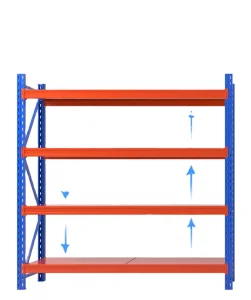
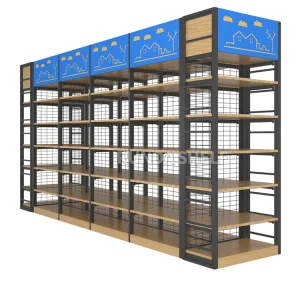
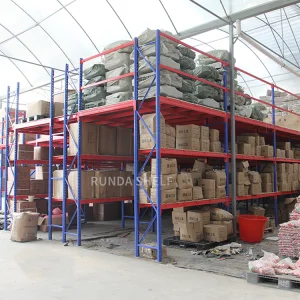
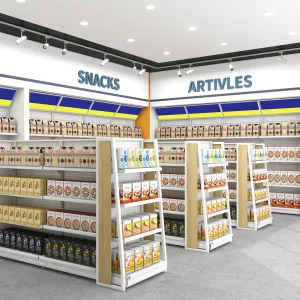
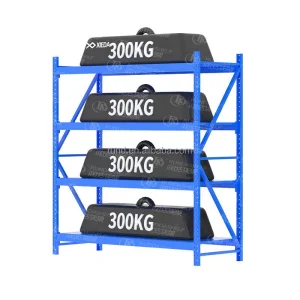
The modern logistics and industrial landscape is experiencing unprecedented growth, driven by rapid urbanization, e-commerce proliferation, and global supply chain integrations. Within this space, heavy-duty warehouse shelving systems—specifically designed to withstand loads exceeding 500KG up to 4,000KG per level—have transitioned from simple storage utility products to strategic capital assets.
Internationally, standardizing safety protocols and structural integrity frameworks (such as the Australian AS4084:2012, European EN 15512, and the American RMI specifications) has become a primary criterion for multinational procurement divisions. Operations spanning Europe, North America, and Australia demand structural stability capable of mitigating seismic activities, dynamic lift-truck impacts, and prolonged material fatigue.
Nanjing Everack Storage Equipment Co., Ltd., established in 2014, leads the industry in manufacturing high-integrity racking systems. Driven by a core R&D engineering cohort of 68 engineers, Everack leverages advanced Finite Element Analysis (FEA) and 3D CAD stress simulations to ensure that every cold-rolled beam profile and upright frame complies with strict global load dynamics.
Quality assurance is not a checkpoint; it is a systematic methodology. With a team of 45 certified QC inspectors, our operations enforce a rigorous testing loop that includes:
| Testing Phase | Inspection Technology / Standard | Operational Value Metric |
|---|---|---|
| Raw Material Assessment | Ultrasonic flaw testing & mechanical steel thickness verification | Guarantees nominal yield strength of Q235B & Q355B structural steel |
| Weldment Diagnostics | Automated robotic weld seam Magnetic Particle Testing (MPT) | Identifies internal porosity & micro-cracks before surface coating |
| Structural Load Validation | Static and dynamic heavy-load stress test simulations | Ensures safety factors of 1.5 to 1.8 over nominal capacity (>500KG) |
| Surface Optimization | Epoxy powder coating thickness, cross-cut adhesion & salt spray testing | Ensures absolute rust mitigation under high-humidity environments |
An inside look into our state-of-the-art Nanjing fabrication facility. Every machine is calibrated to deliver tight tolerances, maintaining structural alignment across heavy vertical spans.
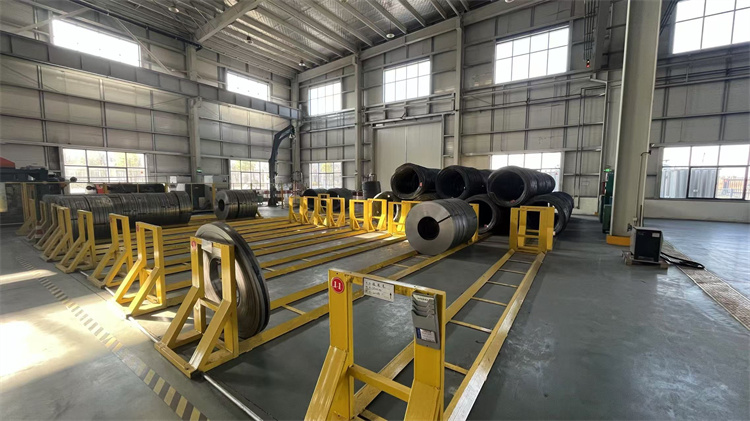


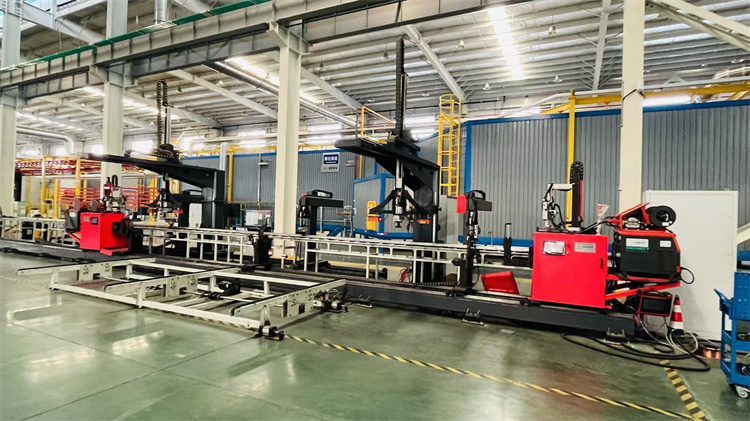


Heavy-duty storage systems are not "one size fits all." Different international environmental factors impose distinct demands on physical configurations:
Sub-zero conditions alter the crystalline structure of structural steel, making it susceptible to brittle fractures. Everack uses low-temperature resilient alloy steel combined with structural profiles designed to prevent structural contraction stresses. Hot-dip galvanized finishes protect against humidity and ice build-up.
Operating in active fault zones requires dynamic bracing calculations. Everack designs customized footplates, dynamic expansion anchoring systems, and heavy bracing nodes compliant with AS4084 and local structural guidelines. This helps absorb and dissipate seismic energy, preventing collapse.
High throughput environments rely on mechanical loading and retrieval. These operations feature automated guidance tracks, column corner-guards, and visual alignment marking. We prioritize dynamic load testing and fatigue resistance to maintain safety during 24/7 high-intensity operations.
Tooling and industrial dies demand localized point-loading resistance. Rather than standard configurations, we supply reinforced P-beams, structural channel profiles, and drop-in safety support bars that distribute localized loads evenly across upright frames.
As logistics complexes scale vertically, modern industrial warehousing is evolving. Nanjing Everack's R&D team focuses on two main growth areas:
Integrating strain-gauge sensors directly into structural steel beams allows warehouse managers to monitor structural stresses in real-time. System alerts trigger automatically if localized loads exceed set safety margins, protecting workers and assets.
We are optimizing our electrostatic powder coating process with low-bake, zero-VOC powder formulas. This reduces energy consumption during manufacturing while maintaining durability, UV stability, and impact protection.
 Everack