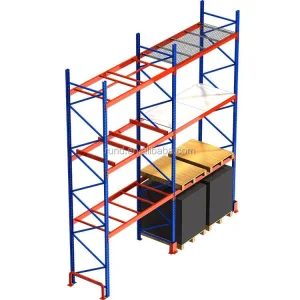
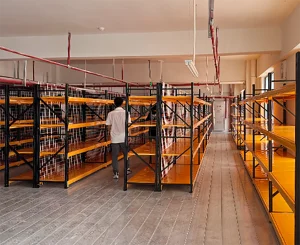
In the era of rapid e-commerce proliferation and real-time inventory management, the demand for high-capacity, resilient warehousing architectures has undergone a significant transformation. No longer treated as simple passive hardware, industrial racking solutions such as heavy storage shelves and beam shelves serve as structural foundations that dictate the throughput speed, safety metrics, and vertical space optimization of modern distribution facilities. Engineers and logistics architects now approach rack system design with strict mathematical precision, accounting for static stress loads, dynamic forklift impacts, and seismic frequency disturbances.
Modern beam shelves are engineered to integrate seamlessly with automated guided vehicles (AGVs) and autonomous mobile robots (AMRs). Perfect alignment tolerances and structural flatness deflection metrics (not exceeding L/300) are engineered directly into column and beam profiles.
With regions experiencing increased high-magnitude seismic events, structural steel formulations (such as grade Q355B or Q235B) are shaped with specific physical geometries to dissipate dynamic kinetic energy, conforming strictly to international EN 15512 and AS4084 guidelines.
For cold-storage and highly humid chemical warehousing setups, standard surface finishes are insufficient. The development of electrostatic powder coating cured at high temperature alongside hot-dip galvanization guarantees multi-decade rust resistance.
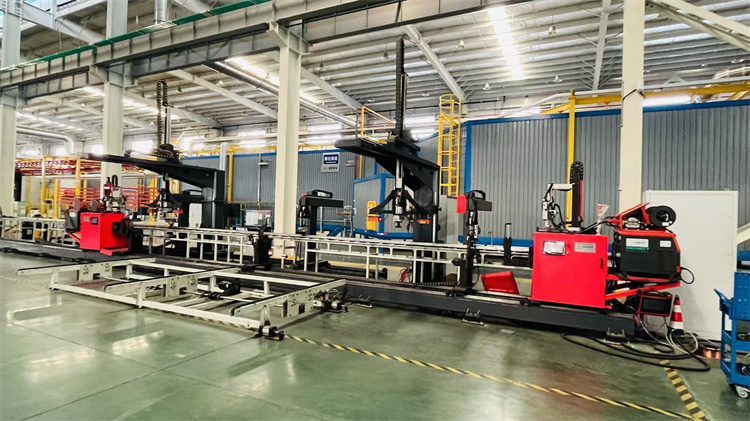
As a premier beam shelf factory and global exporter, we leverage advanced metallurgical processing and computational structural testing to meet the rigorous demands of supply chain directors worldwide. The integration of high-precision roll-forming lines, robotic welding stations, and structural design simulations ensures that our heavy-duty rack systems minimize failure vectors while maximizing long-term operational ROI.
Officially established in 2014, Nanjing Everack Storage Equipment Co., Ltd. operates as a premier enterprise with over 12 years of core industry experience in industrial racking design and structural manufacturing. Situated in a modern industrial center in Nanjing, China, our manufacturing facility spans an expansive building area of 38,500 square meters. As a specialized global vendor with 9 years of dedicated export experience, our products are distributed across North America, Western Europe, and Australia, generating an impressive annual export revenue of USD 28.5 million.
Supported by a robust network of more than 1,200 upstream supply chain partners—including top-tier steel suppliers, automated powder coating providers, and precision hardware manufacturers—we serve high-tier international clients. Our primary customer base consists of third-party logistics (3PL) providers, global e-commerce distribution centers, cold storage operations, and large-scale manufacturing facilities.
Driven by strong engineering capabilities, Everack employs a professional team of 68 R&D engineers who utilize Finite Element Analysis (FEA) and 3D CAD modeling to engineer high-capacity, seismic-resistant storage systems. In the past year alone, our engineering unit successfully released 185 new product innovations and customized profile iterations.
Quality control is embedded at every phase of our production lines. We maintain a dedicated Quality Control department staffed by 45 certified QC inspectors. Our quality detection standard complies strictly with international metrics (ISO 9001, CE, and AS4084 structural safety guidelines).
Our facility features automated rolling mills, computer-numeric-controlled (CNC) milling structures, precision laser cutting systems, and high-performance welding robotics to assure profile dimension consistency and structural alignment tolerances.
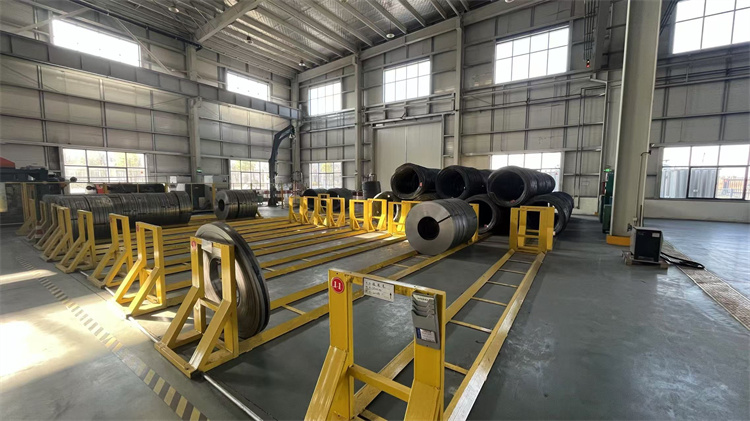




When sourcing heavy-duty beam shelf racking at scale, procurement managers face a wide variety of national design codes, steel grades, and load testing methods. Ensuring safety requires matching chemical and physical specifications to the environmental stresses of the site. For instance, cold storage operations require steel formulated to resist brittle fracture at low temperatures. In contrast, coastal distribution zones need specialized corrosion protection to resist atmospheric humidity.
Our primary structural steel columns utilize high-yield strength steel plates (Q235B and Q355B), comparable to ASTM A36 and ASTM A572 Grade 50. The load performance profile is determined by carbon levels and micro-alloying elements, which give the material the required ductility to handle sudden load shifts and impacts.
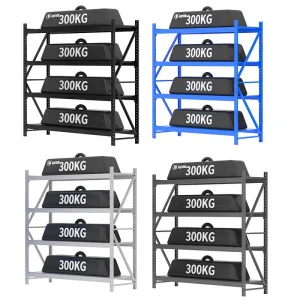
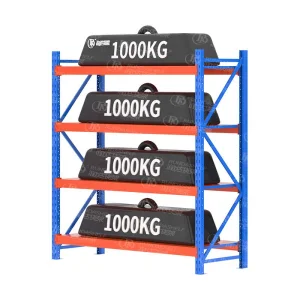
Our R&D engineering division designs system configurations according to the ANSI/RMI MH16.1 specification. We simulate localized buckling, frame shear stress, and connection point fatigue under load ratings up to 4,000 kg per storage level.
Exporting heavy industrial systems globally requires more than just manufacturing; it demands complete alignment with regional building regulations. Different markets enforce distinct structural codes for heavy industrial storage. Everack maintains a compliance infrastructure that simplifies local building permit processes for international project sites.
Compliance with RMI (Rack Manufacturers Institute) and AISC structural steel standards, complete with local engineering calculations and PE stamps for seismic permit approvals.
Adherence to EN 15512, EN 15620, and EN 15635 frameworks. Our systems carry CE certifications and verify tolerances suitable for high-speed material handling equipment.
Manufactured to comply with AS4084-2012 / AS4084-2023 steel storage racking safety design metrics, ensuring structural stability under high loading conditions.
Implementing raw steel sourcing from electric arc furnaces to reduce embodied carbon footprint. Adoption of zero-VOC, heavy metal-free powder coatings across all painting stages.
Development of smart beam connectors embedded with strain gauges and accelerometer nodes, enabling real-time structural health monitoring and overload warnings.
Optimizing structural alignment profiles to meet the sub-millimeter tolerances required for next-generation automated vertical storage and retrieval systems (ASRS).
 Everack