Engineered to handle extreme loads, ensure logistics velocity, and maintain rigid safety margins.
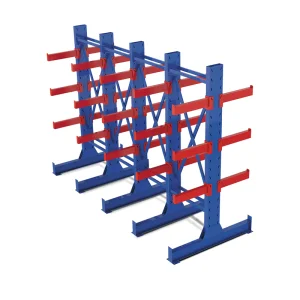
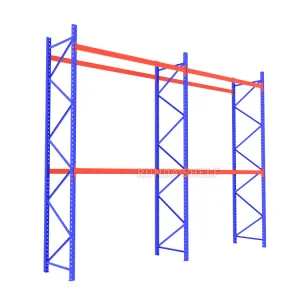
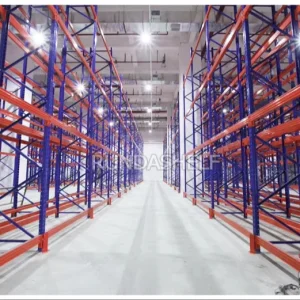
In the contemporary global logistics landscape, warehouse optimization is no longer just a structural challenge—it is a critical driver of supply chain agility. With industrial real estate pricing scaling continuously in regions like North America, Western Europe, and Australia, supply chain leaders must maximize high-density volumetric utilization without compromising operational velocity or safety margins.
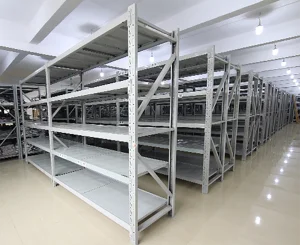
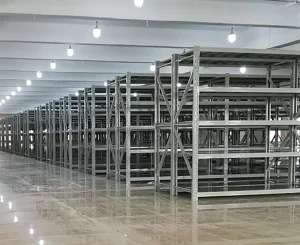
As a leading heavy storage shelf factory & supplier, we recognize the shifts in global procurement demands. Modern materials handling systems require a holistic transition from legacy static storage structures to intelligent, highly customizable, and structurally resilient structural pallet racking systems. High-intensity applications, particularly in Third-Party Logistics (3PL), temperature-controlled cold storage, and heavy industrial manufacturing, command heavy storage shelves configured for maximum yield strength and long-term durability.
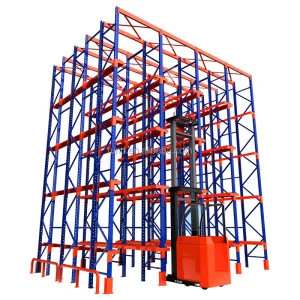
Global supply chains are increasingly shifting toward automated logistics integrations. Our structural designs are ready for automated storage and retrieval systems (ASRS) conversion. Integrating heavy steel pallet shelves with computerized retrieval mechanisms minimizes manual forklift interaction, reduces structural wear, and improves inventory tracking efficiency.
Understanding structural dynamics is crucial. Nanjing Everack incorporates cold-rolled profiles utilizing high-grade structural steels (specifically Q235 and structural iterations) that yield high ductility and structural load tolerance. This safeguards operations against structural deformation caused by impact accidents or load distribution miscalculations.
Nanjing Everack Storage Equipment Co., Ltd. - A Trusted Partner in Global Materials Handling Engineering
Established officially in 2014, Nanjing Everack Storage Equipment Co., Ltd. operates with over 12 years of core industry experience. Our production operations are based in the prominent industrial hub of Nanjing, China, within an expansive facility covering a building area of 38,500 square meters.
As a global vendor with 9 years of dedicated export experience, our products are distributed across North America, Western Europe, and Australia. Our operation's robust upstream network comprises over 1,200 partners. This enables us to maintain raw material consistency, implement modern powder coating technologies, and acquire certified precision accessories at competitive economics.
Our engineering unit comprises 68 professional R&D engineers. Using Finite Element Analysis (FEA) and complex 3D CAD modeling, they customize profile designs, beam configurations, and seismic bracing structures. In the past year alone, our engineering unit introduced 185 product innovations and custom profile configurations.
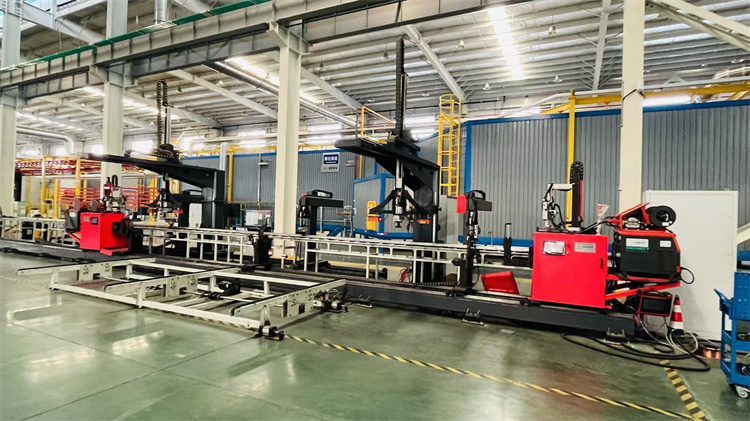
Our Quality Control team consists of 45 certified QC inspectors, operating under strict alignment with ISO 9001, CE, and AS4084 safety guidelines. Raw materials undergo ultrasonic testing, automated robotic weld line inspection, and dynamic load testing to ensure field reliability.
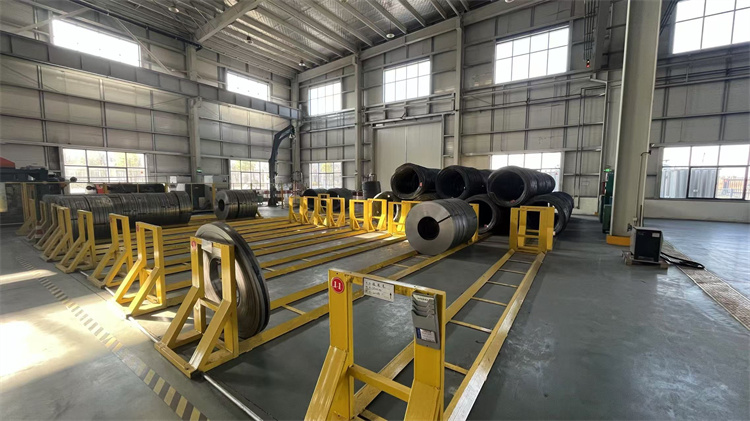
Every structural component of our heavy storage shelves is forged in-house under strict, digitized quality verification.




The Physics and Calculations Behind High-Capacity Safe Storage Engineering
Modern industrial heavy-duty racking relies on the structural integrity of carbon steels. We construct our load-bearing upright structures and horizontal crossbeams using high-grade Chinese Q235B and Q355B structural steel profiles. Q235B steel exhibits a yield strength rating of 235 MPa, offering an optimal balance of structural ductility and formability during the cold-rolling process. For extreme static stress situations, we utilize Q355B steel, which features a higher yield limit of 355 MPa to allow for optimized profiles under dense heavy-pallet configurations.
Our cold-rolling mills form these structural steels into complex, multi-bend profiles. Multiple bends along the upright length increase structural load capacity and prevent local torsional buckling under load-bearing operations.
Using CAD modeling and Finite Element Analysis (FEA), we simulate complex stress, strain, and displacement fields across the entire racking layout prior to structural manufacturing. This design process ensures we calculate critical structural performance metrics including:
Industrial storage configurations often operate in environments prone to corrosion, humidity, or temperature extremes. We utilize automated powder spraying lines to apply high-density epoxy-polyester coatings. A comprehensive pre-treatment process, including shot blasting and chemical degreasing, prepares the steel to receive a 60 to 80-micron thick coating. This treatment achieves high mechanical adhesion and impact resistance.
For outdoor distribution centers or sub-zero refrigeration cold rooms (-30°C), we employ structural hot-dip galvanizing. Submerging steel components in a 450°C molten zinc bath creates a metallurgical bond. This zinc coating shields the steel, preventing rust propagation even under severe mechanical wear.
Our heavy storage systems comply with international standards to ensure safety, including:
Aligning structural storage solutions with vertical-specific supply chain layouts
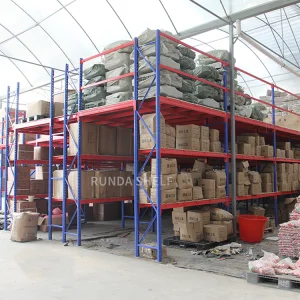
High-volume distribution centers require storage systems optimized for high throughput. We design multi-level mezzanine systems, selective pallet racking systems, and carton flow rack systems to facilitate rapid picking cycles. These systems integrate with automated conveyors, sorting lanes, and RFID-guided inventory tracking systems.
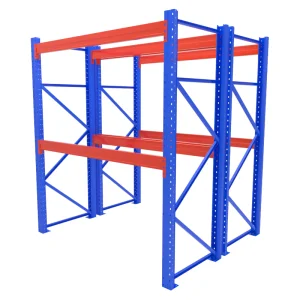
Our double-deep selective pallet racking designs enable logistics operators to increase overall volumetric efficiency by up to 30% compared to standard configurations, maximizing storage capacity within the same footprint.
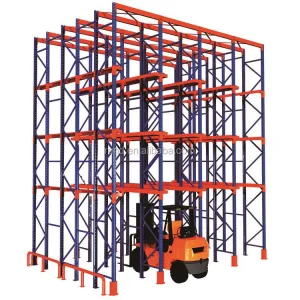
Operating cold storage facilities incurs significant energy costs, demanding high structural density to minimize refrigerated volume per pallet slot. We engineer heavy-duty drive-in systems and mobile pallet racking systems specifically for these environments. High-density designs minimize aisles, maximizing cold room volume.
For sub-zero applications, we specify low-temperature-tolerant steel grades that retain ductility, preventing cold-induced structural embrittlement under continuous freezing temperatures.
Driving the digital transformation of industrial warehousing infrastructure
Developing and integrating strain-gauge sensors within critical upright uprights to detect load anomalies and structural deflection in real-time, preventing structural failures.
Optimizing rolling tolerances and slot alignment to facilitate integration with high-velocity Automated Storage and Retrieval Systems (ASRS) and robotic picking cranes.
Partnering with green steel suppliers to utilize low-carbon recycled steels and energy-efficient powder coating methods, helping clients meet environmental goals.
Direct technical answers addressing engineering, procurement, and safety metrics.
The main difference lies in their yield strength ratings. Q235 steel has a minimum yield strength of 235 MPa, while Q355B steel features a minimum yield strength of 355 MPa. Using Q355B steel allows for thinner cold-rolled profiles to carry equivalent loads, or increases the safe load capacity for high-bay configurations without adding structural weight.
We employ automated robotic welding machines for consistent weld penetration and geometry. Our QA team utilizes non-destructive Magnetic Particle Testing (MPT) and ultrasonic flaw detection on load-bearing weld seams to ensure they are free of internal cracks or inclusions.
In Australia, structural steel racking must comply with AS 4084-2012, which specifies design and testing parameters. In Europe, the relevant standard is EN 15512. We design, manufacture, and test our heavy storage shelves to meet both standards, verified by external CE testing.
For sub-zero cold storage units (ranging from 0°C to -30°C), we recommend hot-dip galvanizing. This coating creates a corrosion-resistant barrier that protects structural steel from condensation rust, maintaining durability in cold environments.
Standard pallet racking can be adapted for automation, but ASRS integration requires tighter manufacturing tolerances, precise upright alignments, and rigid deflection limits. Our R&D team configures and manufactures racking systems to meet these tight tolerances for crane and shuttle compatibility.
Our custom configurations accommodate load capacities from 500 kg up to 4,000 kg per shelf level. We determine the necessary upright thickness, beam span profiles, and safety pins through finite element analysis based on your specific load requirements.
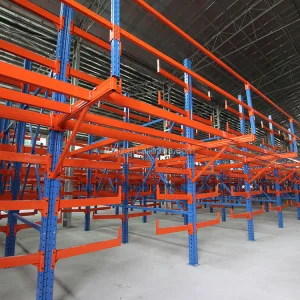
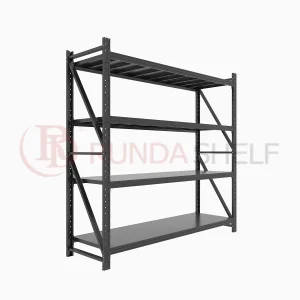
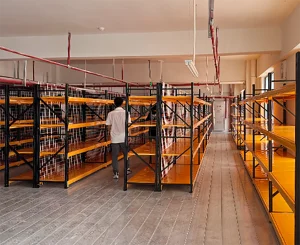
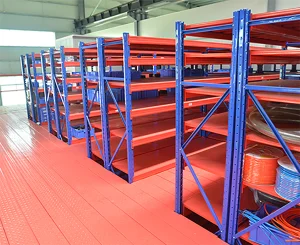
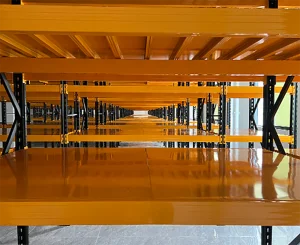
Discover our range of selective, mezzanine, and cantilever systems customized for industrial operations.
 Everack