Global buyers increasingly view Pegboard Displays as practical tools for organized, flexible, and measurable retail presentation. They appear in hardware stores, supermarkets, trade booths, workshops, and compact showrooms. A strong display must hold products securely, support quick changes, and remain attractive after repeated handling.
Martin M. Pegler, a respected visual merchandising expert, wrote, “The purpose of visual merchandising is to sell more merchandise to more people, more often.” His statement remains relevant. Pegboard Displays turn blank walls into active selling areas. Hooks, shelves, baskets, and signage can work together like a quiet sales team. Yet appearance alone is not enough.
Global buyers must examine board thickness, hook strength, surface finish, packaging quality, and installation methods. Moisture resistance matters in humid warehouses. Smooth edges matter during installation. Flat-pack designs can reduce shipping volume, but weak packaging may create costly damage. That detail is easy to miss.
The best option depends on the product, store format, and local operating conditions. Steel boards may suit heavy tools. MDF or plastic boards may fit lighter merchandise and branded interiors. Some buyers focus too heavily on the lowest unit price. That can be a mistake.
This guide compares leading Pegboard Displays through durability, flexibility, visual impact, customization, logistics, and long-term value. It also considers an uncomfortable question: are all “global” solutions truly adaptable? Not always. Supplier communication, replacement parts, and clear technical specifications can decide whether a display performs well beyond the showroom.
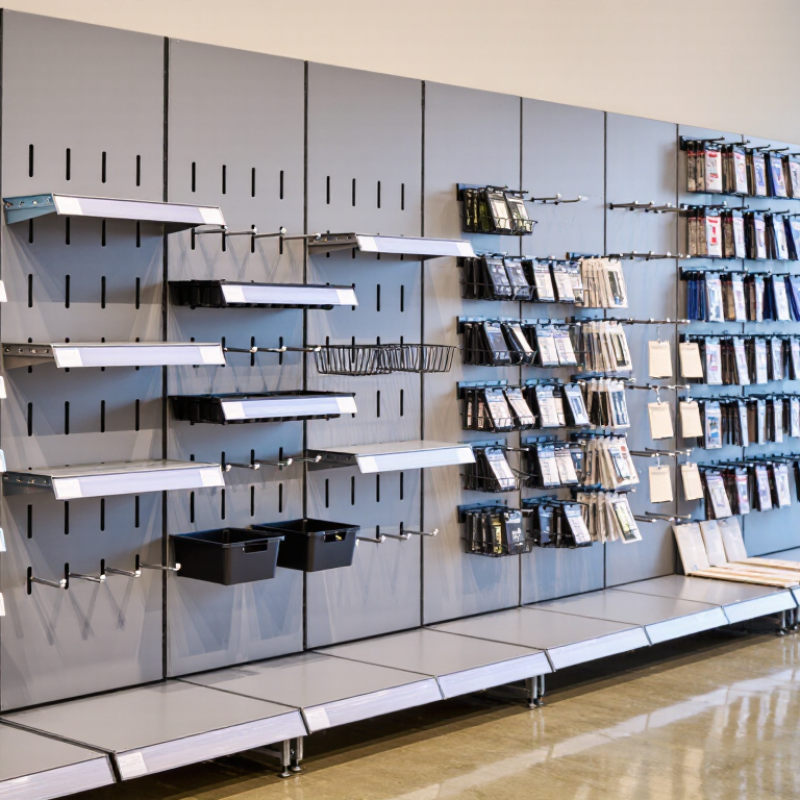
Metal pegboard displays suit global buyers needing strength, repeatable installation, and frequent product changes. Powder-coated steel handles heavier packaged goods and busy retail environments. It also supports hooks, shelves, and baskets with predictable spacing. In humid regions, buyers should confirm corrosion protection and coating performance. A small finish defect can become a costly maintenance issue.
Wood pegboards create a warmer setting for boutiques, homeware stores, and showroom interiors. They feel less industrial and can support custom staining or painted finishes. However, wood reacts to moisture and temperature changes. Plastic pegboards are lighter, easier to ship, and useful for temporary displays or damp locations. They resist moisture, but sunlight and heavy loads may reduce service life. No material wins every market. That trade-off is easy to miss.
Tips: Match the board to the product weight, climate, and replacement cycle. Request load tests, material details, packaging measurements, and installation instructions before ordering. Check whether metal edges are safely finished and whether wood panels meet local fire requirements. For plastic, ask about UV resistance and temperature limits. I would also test one sample in the target environment. A catalog image cannot reveal warping, odor, or difficult assembly.
What Are the Top Pegboard Displays for Global Buyers?
Core Specifications: 32 mm Hole Pitch, Board Thickness, and Load Ratings
For global buyers, a 32 mm hole pitch offers practical compatibility with many standard hooks and accessories. Measure the pitch center to center, not from hole edges. Small production tolerances can affect accessory fit. I recommend checking several points across the board. One measurement is not enough.
Board thickness controls stiffness, mounting security, and long-term appearance. Thin panels may suit lightweight packaging or small tools. Thicker panels handle repeated loading more confidently. For retail displays, 6 to 9 mm is often a useful working range. However, the correct choice depends on material, span, and wall support. A thick board can still fail if its fixings are weak.
Load ratings need careful reading. A stated capacity may describe one hook, one panel, or a fully supported installation. These are different conditions. Ask whether testing used a centered load, uneven weight, or repeated loading. I have found that distributed loads behave very differently from a single heavy item. Humidity and temperature changes also matter during international shipping and installation. A clean specification sheet helps, but it cannot replace a sample inspection. I would test the actual hook, panel, and wall connection before ordering in volume. Mistakes happen, especially when drawings use different measurement systems.
| Display Configuration | Hole Pitch | Board Thickness | Typical Material | Recommended Shelf Depth | Distributed Load per Shelf | Suitable Applications |
|---|---|---|---|---|---|---|
| Light-Duty Wall Panel | 32 mm | 3–5 mm | Perforated steel | 150–200 mm | 10–20 kg | Small tools, accessories, packaged goods |
| Standard Retail Pegboard | 32 mm | 5–8 mm | Powder-coated steel or MDF | 200–300 mm | 20–35 kg | Hardware, stationery, household products |
| Reinforced Heavy-Duty Panel | 32 mm | 8–12 mm | Reinforced steel | 250–400 mm | 35–60 kg | Power tools, automotive parts, industrial supplies |
| Freestanding Double-Sided Unit | 32 mm | 5–8 mm | Steel frame with steel panels | 200–300 mm | 20–40 kg per side | Promotional merchandise, retail floor displays |
| Countertop Pegboard Display | 32 mm | 3–6 mm | Steel or coated fiberboard | 100–180 mm | 5–15 kg | Point-of-sale items, samples, lightweight accessories |
| Modular Slat-and-Peg System | 32 mm peg spacing | 6–10 mm | Steel, aluminum, or engineered board | 200–350 mm | 25–50 kg | Flexible merchandising and seasonal layouts |
For global buyers, the strongest pegboard display is not always the largest one. It should balance SKU density, hook capacity, and product visibility. A practical unit may hold 24 to 36 hooks, depending on product weight and package width. Narrow hooks increase capacity, but crowded products become harder to browse.
SKU density shows how many sellable items fit within one display area. Measure usable board width, hook spacing, and facing count. For example, a 90-centimeter panel with 30 hooks may support strong variety without creating visual clutter.
Product visibility depends on eye-level placement, clear spacing, and readable labels. Dark packaging can disappear under weak store lighting. Adjustable hooks help, but they may reduce stability when overloaded.
Tips:
Leave one empty hook space between larger packages. Keep best-selling items between 120 and 160 centimeters from the floor. Test visibility from three meters away. Record which products shoppers touch first.
During installation trials, buyers should inspect load balance and replenishment time. A display that looks efficient may require frequent restocking. That increases labor costs. Regional packaging sizes also change the final capacity. I have seen planned layouts lose nearly 15 percent of their expected SKU count after packaging samples arrived. The lesson is uncomfortable: digital measurements are useful, but physical testing remains necessary. Retail teams should measure hook strength, product reach, and empty-space recovery before approving larger orders.
For global buyers, pegboard displays should be judged beyond appearance and price. A clean layout means little if the materials lack traceable documentation. FSC certification can support responsible sourcing for wooden or paper-based panels. Ask for a valid certificate, scope, and chain-of-custody details.
RoHS matters when displays include lighting, digital screens, wiring, or powered accessories. It restricts certain hazardous substances in electrical and electronic equipment. REACH review is also important for coatings, plastics, adhesives, and metal finishes. Request current declarations, material safety information, and laboratory test records. Do not rely on a supplier’s general statement alone. Details can be missed.
ISO 9001 indicates a controlled quality management system, not automatic product compliance. It can support consistent inspections, corrective actions, and document control. Experienced purchasing teams should compare sample results with mass-production records. Check panel thickness, edge finishing, hook strength, and packaging damage after transit. A small display may still face major shipping stress. We once saw a strong-looking fixture fail because its rear fittings were poorly secured. That mistake was preventable. Buyers should also confirm destination-market requirements, since certification expectations vary. Independent verification is wise when documents seem incomplete, outdated, or strangely identical across products.
Global buyers should evaluate pegboard displays beyond appearance. A strong export model usually combines stable panels, reinforced frames, adjustable hooks, and clear assembly instructions. Material choice matters: powder-coated steel suits high-traffic stores, while engineered wood can reduce weight and improve visual warmth. Confirm load capacity with test data, not only product photos. A 120 × 60 × 180 cm display may look compact, yet its packed volume can rise sharply after protective corners and hardware cartons are added.
CBM directly affects freight budgeting and warehouse planning. Calculate length × width × height for every packed carton, then compare the total with container space. Request carton dimensions, gross weight, stacking limits, and pallet details.
ISTA 3A testing can simulate common parcel hazards, including drops, vibration, and compression. It is useful evidence, but it does not remove every transport risk. Ask for the test scope and report date.
MOQ should match your sales forecast. A low MOQ may carry higher unit costs, while a large MOQ can trap cash in slow-moving colors or accessories.
Lead time should include component sourcing, production, inspection, packing, and a realistic buffer. It is often underestimated.
Tips: Ask for one production sample and one fully packed shipping sample. Measure the carton yourself. Check hook fit, panel flatness, edge protection, and assembly time. Leave room for revision; the first design is rarely perfect. Share artwork and packaging requirements before confirming the purchase order. Clear documents prevent expensive surprises.
Metal boards suit heavier packaged goods and repeated merchandising changes. They support hooks, shelves, and baskets with consistent spacing. Confirm corrosion protection in humid regions. A tiny coating defect can become an expensive maintenance problem.
Wood works well in boutiques, homeware stores, and warm showroom interiors. It offers a softer appearance than metal. Custom stains and painted finishes are possible. However, moisture and temperature changes may cause warping. Appearance alone can mislead.
Yes, plastic boards are lightweight and easier to ship. They resist moisture and suit temporary installations or damp locations. Sunlight and heavy loads may shorten their service life. Ask about ultraviolet resistance and temperature limits.
Match the material to product weight, local climate, and replacement cycle. Request load tests, material details, package measurements, and installation instructions. Test one sample in the target environment. A catalog image cannot show odor or difficult assembly.
A practical unit may hold about 24 to 36 hooks. Capacity depends on product weight, package width, and hook spacing. Narrow hooks increase density. Crowded products become harder to browse. More products are not always better.
Keep popular items around 120 to 160 centimeters above the floor. Leave one empty hook space between larger packages. Test visibility from three meters away. Dark packaging needs adequate store lighting. Record which products shoppers touch first.
Regional packaging sizes may reduce the planned hook count. One layout lost nearly 15 percent after physical samples arrived. Installation may also reveal poor balance or slow replenishment. Physical testing is inconvenient, but necessary.
Request traceable material records, current chemical declarations, and relevant electrical safety documents. For wood panels, check responsible sourcing evidence and local fire requirements. A quality management certificate supports consistent inspections, but it does not guarantee product compliance. Independent verification is wise when documents look incomplete or outdated.
Choosing the right Pegboard Displays for global purchasing requires balancing material, performance, merchandising efficiency, and export readiness. Metal boards offer high strength for tools and heavier products, wood provides a warm retail appearance, and plastic delivers lightweight flexibility for temporary or cost-sensitive applications. Buyers should compare the 32 mm hole pitch, board thickness, hook compatibility, and load ratings to ensure safe and efficient product presentation. Important merchandising metrics include SKU density, hook capacity, shelf organization, and product visibility, all of which affect store productivity and customer access.
For international orders, compliance and logistics are equally important. Suppliers should be able to support FSC requirements for responsibly sourced wood, RoHS and REACH standards for material safety, and ISO 9001 quality management. Export evaluations should also consider cubic volume (CBM), MOQ, lead time, and packaging performance under ISTA 3A testing. A well-selected display system should protect products during transit, simplify installation, meet regional requirements, and provide consistent value across different retail environments.

Everack