Folding Shelves turn unused wall space into a work surface, display area, or compact storage spot. Their defining feature is movement: a shelf panel pivots on hinges or folding brackets, then rests against the wall when not needed. Some models use support arms that lock open; others rely on a folding frame. The details matter. A small desk shelf holding a notebook is not the same job as a garage shelf carrying tools.
Industrial designer Dieter Rams offered a useful design principle: “Good design is as little design as possible.” Applied to Folding Shelves, that means the mechanism should feel simple, but still support the intended load reliably. In this guide, we’ll explain the main parts, how they open and fold, and what to check before installation. Look closely at the hinges, brackets, fasteners, wall material, and manufacturer’s load rating. A shelf may feel solid while empty. That can be misleading.
There are trade-offs. Folding hardware can loosen, and a panel needs clear space to swing down. Even a well-made shelf may disappoint if it is mounted poorly or used beyond its rating. Small details count. A level line, suitable fixings, and a smooth folding test can prevent avoidable frustration. We’ll also consider where these shelves work best, from narrow laundry rooms to craft corners, and where a fixed shelf may be the wiser choice.
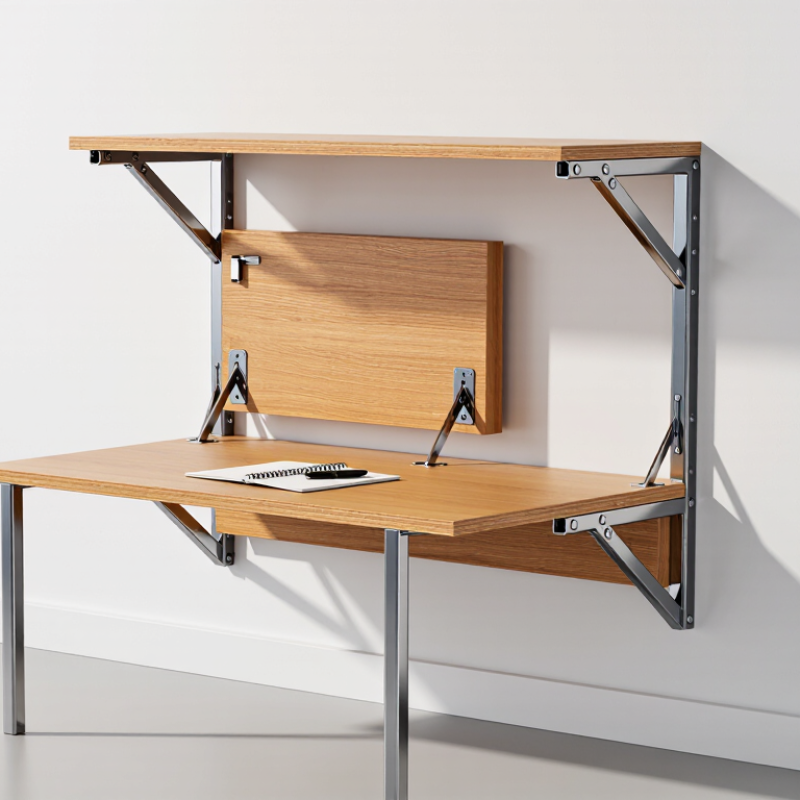
What Folding Shelves Are and What Sets Them Apart
Folding shelves are storage surfaces designed to pivot, collapse, or tuck away when they are not needed. Some attach to a wall with hinged brackets; others fold as part of a freestanding unit. Their key difference from fixed shelves is that they can change position, freeing floor or wall space between uses. That is the point. A shelf can hold a row of jars during meal preparation, then fold flat to clear a narrow walkway.
The mechanism is usually simple: hinges connect the shelf to supports, and brackets or locking arms help hold it open. To fold it, the user releases the support and lowers or raises the surface, depending on its design. Small detail, big difference. A secure stop matters because a shelf that shifts under a load can spill its contents. Check the stated weight limit, mounting instructions, and suitable wall support before placing heavy objects on it.
The phrase “folding shelf” covers many designs, so the label alone does not tell you how much space one saves or how sturdy it feels. A shallow shelf may suit keys and small containers, while deeper versions need more clearance when opened. The trade-off is worth considering: hinges and moving supports can wear or loosen over time, especially with frequent use. Not perfectly. Inspect the fittings now and then, and avoid treating a movable shelf like a permanent workbench.
What Are Folding Shelves and How Do They Work?
Typical Shelf Positions (Schematic)
A folding shelf pivots on a hinge, moving between a folded position against its mounting surface and an open position for use. Supports or locking brackets help hold many designs open. The angles shown are idealized positions, not specifications for every shelf.
Key Components That Support a Folding Shelf
What Are Folding Shelves and How Do They Work?
Key Components That Support a Folding Shelf
A folding shelf depends on several parts working together, not just a hinged board. A wall plate or mounting brackets connect the shelf to the wall. Hinges let the shelf move between open and folded positions. When opened, support arms or folding brackets hold the shelf level and carry much of its load. Some designs use locking catches to keep the supports from folding unexpectedly. Small parts matter.
Fasteners and the wall surface matter just as much. Screws need to suit the shelf hardware and the wall material; a fastener that works in a wooden stud may not hold securely in hollow drywall. Check the installation guide for placement and load limits. A shelf that feels steady while empty may flex under stacked dishes or a row of books. That detail is easy to overlook.
Tips: Before loading the shelf, open it fully and check that each bracket locks into place. Look for loose screws, uneven movement, or a gap between the wall plate and wall. If the shelf rocks, stop and review the mounting rather than adding more weight. Folding mechanisms can wear, too, so occasional checks are sensible.
What Are Folding Shelves and How Do They Work? - Key Components That Support a Folding Shelf
| Component |
What It Does |
How It Works |
Practical Notes |
| Shelf panel |
Provides the flat surface for holding items. |
It pivots between a horizontal use position and a folded position, usually close to the wall or supporting frame. |
Panel material, thickness, and size affect weight and load capacity. Follow the product’s stated limits. |
| Hinges or pivot joints |
Connect the panel to a wall plate, frame, or brackets. |
A hinge pin or pivot lets the panel rotate while keeping it attached to its support. |
The number and placement of hinges vary by design. Secure attachment helps prevent looseness and uneven movement. |
| Support brackets or folding arms |
Support the shelf when it is open. |
Depending on the design, an arm unfolds, a bracket swings into place, or a linkage braces the panel beneath it. |
Some models use locking supports; others rely on a different bracing mechanism. Check that supports are fully engaged before loading. |
| Wall plate or mounting rail |
Provides the fixed connection between the shelf assembly and the wall. |
The plate or rail distributes forces from the hinges and supports to its mounting points. |
Mounting hardware must suit the wall construction. Installation into appropriate structural support is important for safe use. |
| Fasteners |
Hold the hinges, supports, and mounting hardware in place. |
Screws, bolts, or other specified fasteners join components and transfer forces through the assembly. |
Use fasteners appropriate for the shelf design and wall type; unsuitable or loose fasteners can compromise support. |
| Lock, catch, or release mechanism |
On designs that include one, helps retain or release the shelf in a position. |
A latch, catch, or release may hold a support in place or allow it to fold; the exact action depends on the mechanism. |
Not every folding shelf uses a separate latch. Operate any fitted mechanism as directed by its instructions. |
A folding shelf works by pivoting its panel while a support system holds it in the open position. Designs and load limits differ, so use the installation instructions supplied for the specific shelf.
How the Folding Mechanism Opens, Locks, and Folds
A folding shelf pivots on hinges fixed to a wall or frame. When closed, its panel rests near the surface, leaving the floor clear. Pull the front edge outward, and the panel rotates down or up, depending on the design. The movement should feel controlled, not like a loose flap. Slowly is better.
Support arms or hinged brackets carry the shelf once it opens. In many designs, the arms straighten and pass slightly over center, creating a stable position. Other models use a catch or pin that clicks into place. Listen for the click, then press gently near the front edge to check that the shelf is seated. A lock that looks engaged may not be fully engaged. Avoid placing weight on it until the supports are set.
To fold the shelf, lift or release the catch, then guide the panel back toward the wall. Keep fingers away from hinge gaps; the closing edges can pinch. If the shelf resists, stop and check for a blocked bracket or uneven mounting rather than forcing it. A little stiffness can be normal when parts are new, though persistent scraping deserves attention. Wall fixings also matter: even a sound folding mechanism can shift if its supports are attached to unsuitable material. Each shelf has a rated capacity, and that limit applies only when it is installed as specified.
Common Folding Shelf Designs and Mounting Methods
Folding shelves usually use a fixed wall plate, hinges, and a shelf panel that swings down when needed. Drop-leaf designs keep the panel attached along one edge, while folding-bracket designs use hinged arms beneath it for support. Some compact models hide their brackets when folded. Check the mechanism before buying; similar-looking shelves can move in different ways.
Mounting depends on the wall and shelf design. For drywall, fasten the support plate into wall studs whenever possible, since the shelf must resist both its load and the leverage created by items near its front edge. On masonry, use anchors rated for that surface and follow the installation instructions. Measure carefully. A small tilt can make cups slide or cause the hinge to bind.
Mark the holes with a level, then confirm that the shelf can open fully without hitting a door, cabinet, or walkway. Tighten the hardware evenly, and test the shelf gradually with light objects before adding heavier items. Keep loads within the maker’s stated limit. That limit can vary with the wall, fasteners, and installation quality, so it is not a universal number. A shelf may feel secure at first and still loosen over time; periodic checks are sensible, especially in a busy kitchen or workshop.
Typical Uses and Load-Bearing Considerations
Folding shelves suit spaces that need temporary, compact storage: laundry rooms, craft corners, market stalls, and garages. Their hinged braces lock the shelf open, then fold inward for storage. This convenience comes with a trade-off: joints and wall fixings carry the load, so capacity depends on the model, mounting surface, and how weight is distributed. A box of tiles concentrated at one edge can strain the brackets more than evenly spaced light supplies.
Load ratings are not interchangeable. Check whether the stated limit applies per shelf or to the whole unit, and follow the maker’s instructions for anchoring and use. OSHA’s materials-handling rule, 29 CFR 1910.176(b), says stored materials must be stable and secure against sliding or collapse. The CPSC’s 2023 tip-over report estimated 22,500 emergency-room-treated injuries in 2021 involving furniture and television tip-overs; it is not a folding-shelf statistic, but it underlines why stability matters.
Tips: Put heavier items near the supports, keep loads within the stated rating, and test the shelf gently before relying on it. Check hinges and fasteners for looseness. I would not assume a shelf is safe just because it feels sturdy when empty.
Conclusion
Folding Shelves are space-saving surfaces designed to swing out when needed and fold flat against a wall or supporting structure when not in use. Unlike fixed shelves, they use a movable joint and a support system to combine convenient access with a smaller storage footprint. Their main components typically include the shelf panel, hinges or pivot points, and brackets, arms, or cables that help carry weight and keep the shelf stable.
To use a folding shelf, the panel is lowered or swung into position, where its supports help hold it open; a latch or locking feature may prevent it from folding unexpectedly. Releasing the support allows the panel to fold away. Designs and mounting methods vary, including wall-mounted shelves and models attached to cabinets or other sturdy surfaces. They can serve as temporary worktops, utility surfaces, or compact storage areas. Safe performance depends on secure installation, suitable wall support, evenly distributed loads, and observing the shelf’s stated weight limit.

 Everack