Engineered to maximize space utilization, withstand extreme structural strain, and facilitate rapid sanitation cycles.
Analyzing global commercial food preservation, cold-chain operations, and structural design limitations under sub-zero temperatures.
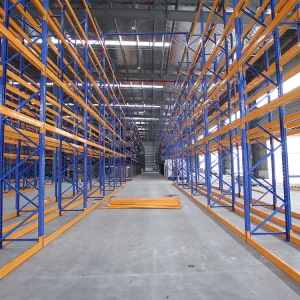
Storing materials in cold-chain warehouses poses unique design obstacles that standard warehouse racks are not engineered to handle. The transition from ambient to deep freeze conditions (down to -40°C in rapid-blast environments) causes standard carbon steel to reach its Ductile-to-Brittle Transition Temperature (DBTT). At this critical threshold, standard steels lose elastic capacity and become vulnerable to brittle fracturing under heavy static and dynamic loads.
Furthermore, air circulation is paramount for maintaining thermal equilibrium across high-density storage zones. Racking configurations must balance load capacity with layout open-area percentages, ensuring blast chillers can penetrate deep pallet setups to prevent warm-air pockets that lead to spoilage and product loss.
The international cold chain logistics market is undergoing structural shifts. Rapid expansion in third-party logistics (3PL) operations, pharmaceuticals, and fresh e-commerce distribution networks requires highly robust and adaptable storage arrays. System builders are moving away from traditional static racking schemes toward semi-automated solutions that reduce the volume of chilled space that needs heating or cooling.
By consolidating spatial configurations using drive-in racking, mobile racking, and radio shuttle solutions, international operators achieve up to a 60% increase in cubic storage capacity. Lower cubic footprint requirements translate directly to reduced refrigeration energy costs, significantly lowering global carbon emissions and operating expenditures for the world's largest logistics centers.
A global leading manufacturer delivering unmatched durability and custom cold-chain configurations for industrial application.
Established officially in 2014, Nanjing Everack Storage Equipment Co., Ltd. operates with a foundation built on over 12 years of core industry experience in high-grade industrial racking design and structural manufacturing. Our production headquarters spans a state-of-the-art building area of 38,500 square meters, incorporating advanced automated welding cells, roll-forming machines, and environmental-friendly powder-coating lines.
As a premier global vendor with 9 years of dedicated export operations, Everack supports essential distributors, installers, and cold-chain integrators across North America, Western Europe, and Australia. Our structural systems generate an impressive annual export revenue of USD 28.5 million, confirming our reliability and authority in the global storage market.
Backed by a robust network of more than 1,200 upstream supply chain partners—including premium domestic steel mills, automated powder coating providers, and precision hardware manufacturers—we serve high-tier international clients consisting of leading 3PL providers, global e-commerce distribution centers, cold storage operations, and large-scale industrial manufacturing facilities.
Step-by-step visual overview of our industrial metal processing, roll-forming, welding, and surface treatment facilities.
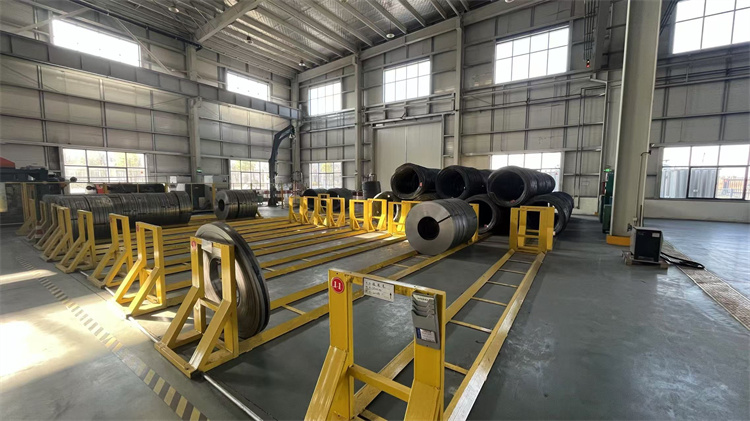


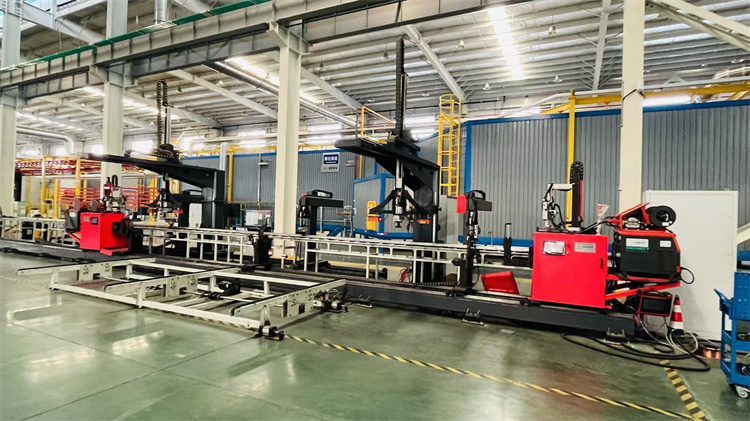


Continuous verification models ensuring our structural components handle static, dynamic, and extreme thermal stresses safely.
Quality management is deeply integrated into every stage of production at our facility. Everack manages a dedicated Quality Control department staffed by 45 certified QC inspectors. Our internal testing procedures conform strictly with international standards, including ISO 9001 quality guidelines, European CE metrics, and the rigorous AS4084 and RMI structural safety specifications.
By tracking raw material quality from initial processing to packaging, we eliminate product inconsistencies. Every production run is documented, providing comprehensive batch traceability for industrial applications.
Adapting physical design variables to match complex regional building codes and extreme cold-storage layout constraints.
We customize physical profiles to match specific storage requirements. Our capabilities include adjustable beam spans, varying upright profile configurations, and steel thicknesses tailored to specific load requirements ranging from 500 kg to 4,000 kg per level.
For high-moisture walk-in coolers and sub-zero blast freezers, we provide tailored color powder coatings, heavy electrostatic treatments, or hot-dip galvanizing (HDG) to prevent oxidation, rust, and chemical degradation.
To secure installations against warehouse collisions and seismic movement, our designs incorporate modular vertical locking holes, heavy-duty floor anchor kits, baseplates, custom seismic bracing, and upright row spacers.
Ensuring compliance with local building codes, fire regulations, and structural guidelines across diverse operational environments.
Operating globally requires adherence to localized engineering and structural standards. In the United States, structural rack designs must align with the RMI (Rack Manufacturers Institute) guidelines and local international building codes (IBC), which specify dynamic seismic load calculations. In Europe, designs must meet the structural safety requirements of EN 15512 and related norms.
For Australia and New Zealand, structural integrity is governed by AS4084, which requires rigorous structural simulations. Everack’s engineering department conducts site-specific structural reviews, providing full calculations for localized compliance, wind loading, and seismic acceleration.
Innovation directions aimed at reducing operational carbon footprints and integrating smart storage technology.
The future of cold-chain logistics relies on full automation. Everack is developing ultra-precision rack profiles engineered for automated storage and retrieval systems (AS/RS). These profiles feature minimal tolerance deviations, allowing automated cranes and shuttle vehicles to operate efficiently and safely in dark, unheated cold storage environments.
To address thermal bridging—where cold temperatures transfer from structural uprights into concrete floor slabs—we are designing high-strength insulation base assemblies. These assemblies minimize thermal loss at floor contact points, preventing frost heave under foundations and reducing overall refrigeration energy costs.
Technical guidance to assist with system planning, regulatory compliance, and installation engineering.
Reliable components designed for logistics facilities, processing environments, and heavy-duty storage applications.
 Everack