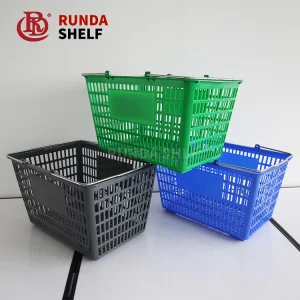
Shopping Basket Factories & Suppliers in the Toronto Market

Next-Gen Store & Supermarket Carriage Solutions: Engineered Performance, Global Scale & Local Canadian Compliance

Send Inquiry Now

1. The Toronto Commercial & Retail Landscape

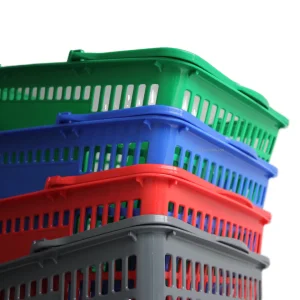
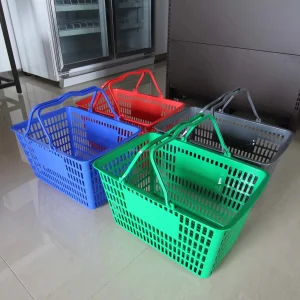
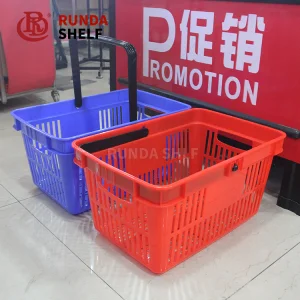
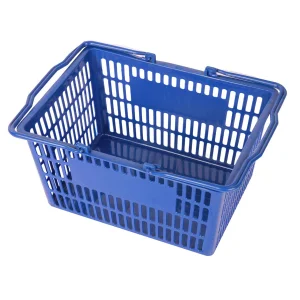
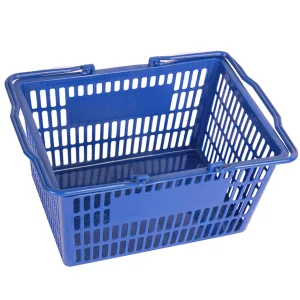
The Greater Toronto Area (GTA) serves as Canada’s primary retail engine, supporting a population exceeding 6.7 million residents. Ranging from dense multi-tier grocery hypermarkets in downtown urban cores to large-scale, high-turnover ethnic supermarkets in Scarborough, Markham, and Mississauga, the physical retail carriage ecosystem requires highly specialized equipment. With rising real estate costs forcing smaller store footprints, local grocers and convenience brands are increasingly replacing traditional large shopping carts with stackable, high-volume rolling and hand-held shopping baskets.

This dynamic local transition requires direct access to high-capacity manufacturers who understand local dynamics. Toronto retail operators look for three critical criteria in their cargo equipment:

  • Thermal Resilience: High fluctuations between hot summers and severe winter weather (-20°C) demand advanced, UV-stabilized impact polymers that resist fracturing.
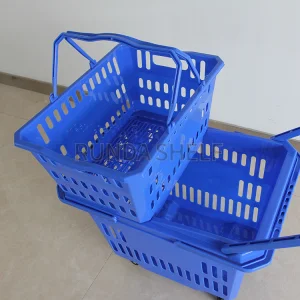
  • Ergonomic Layouts: Narrow store aisles require vertical rollators and double-stacked rolling baskets that save space while keeping product capacities above 30L.
  • Sanitary Design & Recyclability: Integration with eco-initiatives across Ontario requires non-porous PP plastics that are easy to sanitize and eventually recycle.

2. Global Sourcing & Supply Chain Realities

Supermarket equipment sourcing is a complex logistical process. Local retail distribution hubs must align their purchasing cycles with primary production capacities overseas. High-volume shopping basket procurement is heavily reliant on advanced injection-molding technology, high-tensile wire fabrication, and surface treatments. In a global economy marked by freight fluctuations, direct partnerships with comprehensive manufacturing facilities like Nanjing Everack Storage Equipment Co., Ltd. offer crucial stability.

By bypassing third-party trading groups and working directly with raw material processors and robotic assembly plants, corporate purchasing teams at major Canadian chains reduce costs, secure uniform custom-color branding, and ensure consistent product quality across multiple shipping cycles.

Key Logistics Corridors to Toronto

Efficient supply chains rely on key shipping routes connecting East Asian manufacturing hubs to Eastern Canada:

  • Ocean Freight: Shanghai/Ningbo Ports to Port of Vancouver or Prince Rupert.
  • Intermodal Rail: CPKC/CN Rail direct to Toronto MacMillan Yard.
  • Last Mile: Regional distribution centers in Milton, Mississauga, and Vaughan.
38,500m²
Factory Building Area
12+ Yrs
Manufacturing Exp
$28.5M
Annual Export Rev
45+
Certified QC Inspectors

Manufacturing Strength & Nanjing Everack Supply Chain Ecosystem

Nanjing Everack Storage Equipment Co., Ltd. was officially established in 2014, operating as a premier enterprise with over 12 years of core industry experience in industrial racking design, structural manufacturing, and retail cargo systems. Situated in a modern industrial center in Nanjing, China, our manufacturing facility spans an expansive building area of 38,500 square meters. As a specialized global vendor with 9 years of dedicated export experience, our products are distributed across North America, Western Europe, and Australia, generating an impressive annual export revenue of USD 28.5 million.

Supported by a robust network of more than 1,200 upstream supply chain partners—including top-tier steel suppliers, automated powder coating providers, and precision hardware manufacturers—we serve high-tier international clients. Our primary customer base consists of third-party logistics (3PL) providers, global e-commerce distribution centers, cold storage operations, and large-scale manufacturing facilities.

Quality Assurance & Inspection Standards

Quality control is embedded at every phase of our production lines. We maintain a dedicated Quality Control department staffed by 45 certified QC inspectors. Our quality detection standard complies strictly with international metrics (ISO 9001, CE, and AS4084 structural safety guidelines).

Product Inspection Methods:

  • Raw material ultrasonic flaw testing and steel thickness verification.
  • Automated robotic weld seam magnetic particle testing (MPT).
  • Static and dynamic heavy-load stress test simulations for handles and wheels.
  • Epoxy powder coating thickness, adhesion, and salt spray corrosion resistance testing.

R&D Engineering & Customization Capability

Driven by strong engineering capabilities, Everack employs a professional team of 68 R&D engineers who utilize Finite Element Analysis (FEA) and 3D CAD modeling to engineer high-capacity, seismic-resistant storage systems and commercial handling solutions. In the past year alone, our engineering unit successfully released 185 new product innovations and customized profile iterations.

Customization Options:

  • Custom beam span, upright profile thickness, and structural load capacity (from 500 kg to 4,000 kg per level).
  • Tailored color finishes, electrostatic powder coating, or hot-dip galvanizing for outdoor/cold environment resistance.
  • Modular vertical spacing, seismic bracing designs, and bespoke safety accessory integrations.

Advanced Manufacturing Facilities & Process Flow

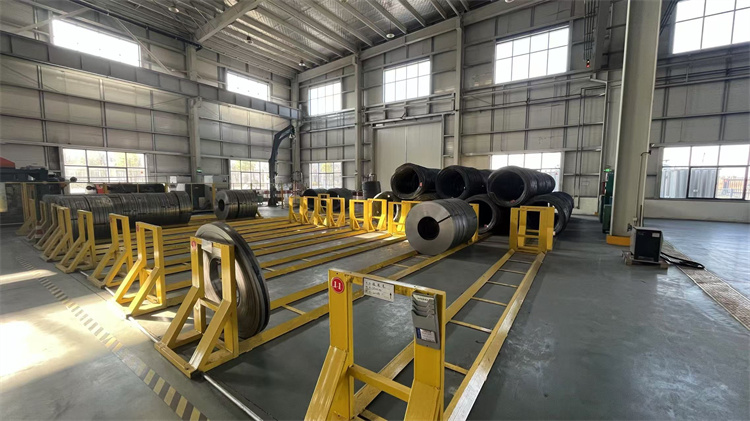
From raw structural materials to automated powder finishing—explore our integrated production floor.
Raw Materials
Raw Materials
Wiredrawing
Wiredrawing
Strengthening
Strengthening
Strengthening Rib
Strengthening Rib
Metal Mesh Production
Raw Materials
Raw Materials
Cutting
Cutting
Bending
Bending
Punching
Punching
P-Beam Rolling
P-Beam Rolling
Diagonal Brace Rolling
Occluding Beam Rolling
Column Production
Column Production
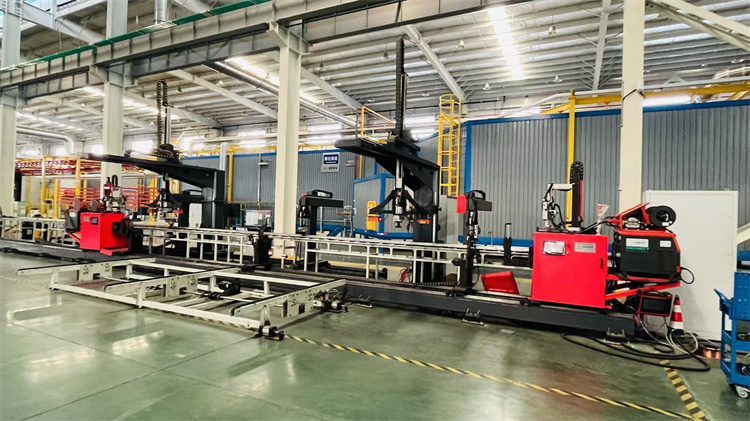
Automatic Welding
Automatic Welding
Powder Spraying
Powder Spraying
Plate Shearing Machine
Plate Shearing
Plate Bending Machine
Plate Bending
Sawing Machine
Sawing Machine
Punching Machine
Punching Machine
Laser Cutting Machine
Laser Cutting
Automatic Welding Machine
Auto Welding
Grinding Machine
Grinding Machine
Shot Blasting Machine
Shot Blasting
Spraying Production Line
Spraying Line
Hot Cleaning Furnace
Cleaning Furnace
CNC Curve Gear Grinding Machine
CNC Gear Grinding
Milling Machine
Milling Machine
Wiredrawing Machine
Wiredrawing M/C
Strengthening Machine
Strengthening M/C
Strengthening Rib Machine
Rib Machine
Metal Mesh Production Line
Mesh Prod Line
P-Beam Rolling Mill
P-Beam Rolling
Diagonal Brace Rolling Mill
Brace Rolling
Occluding Beam Rolling Mill
Occluding Mill
Automatic Column Production Line
Column Line
Welding Robot
Welding Robot

3. Materials Engineering & Performance Standards

In high-turnover retail environments, shopping baskets are subjected to constant mechanical stresses: vertical drop impacts, handle pull fatigue, high-weight loading, and stacking abrasion. To guarantee long-term durability and safety, manufacturing materials must be selected based on rigorous criteria:

  • Virgin Polypropylene (PP) vs. Recycled Blends: While recycled polymers support green initiatives, pure virgin PP delivers superior tensile strength and prevents structural failure under heavy loads. High-grade stabilizers are added during formulation to maintain molecular integrity under interior neon/fluorescent lighting and exterior UV exposure.
  • Metal Structural Parts: Wire mesh frames and handle assemblies are fabricated using high-tensile steel wire. Advanced plating technologies—such as eco-friendly trivalent chrome or durable polyester powder coatings—protect metal elements from oxidation in damp environments (such as grocery produce areas or garden centers).
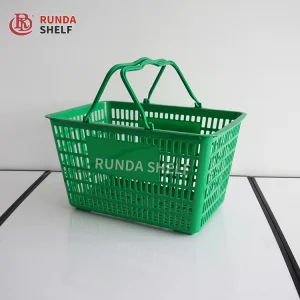
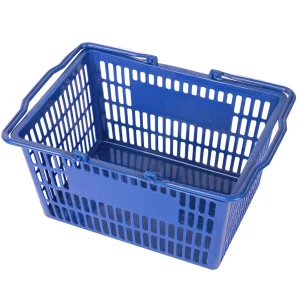
  • Ergonomics & Safety: Baskets are molded with smooth radii and reinforced double-rim structures. Dual-handle designs and integrated heavy-duty caster wheels are engineered to distribute loads evenly and prevent wrist and back strain for customers.

4. Toronto Local Application Scenarios

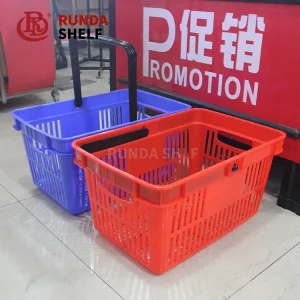
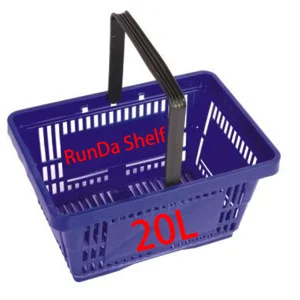
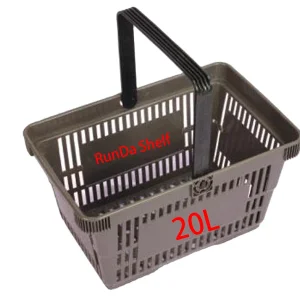
Within the diverse Ontario marketplace, retail systems must be adapted to different regional environments. Downtown Toronto convenience stores require narrow, stackable 20L to 30L hand baskets with close nest spacing to maximize floor space. In suburban retail nodes—like Vaughan, Richmond Hill, and Oakville—hypermarket shoppers prefer larger rolling baskets with capacities of 50L or more, or double-decker cart structures. Specialty boutiques, organic grocers, and high-end cosmetics retailers in Yorkville often look for premium aesthetic styles, including wire mesh designs finished in rose gold, chrome, or wood textures, to complement their store themes.

5. Future Trends in Carriage Systems

As modern technology changes physical retail spaces, carriage equipment is evolving as well. Modern shopping baskets are designed with flat spaces to integrate RFID chips or barcodes, supporting smart self-checkout lines. Ergonomic handle shapes are also designed to securely hold smartphones, allowing shoppers to scan barcodes as they browse. In terms of sustainability, manufacturers are developing durable composite materials that combine recycled plastics with natural fibers (such as seagrass or wood pulp) to reduce environmental footprints without losing structural strength.

Need Customized Logistics and Retail Solutions?

Request custom sizes, unique corporate color schemes, or complete structural specifications tailored for the Canadian market.

Send Inquiry Now

Frequently Asked Questions: Sourcing Baskets for Toronto

Essential insights for corporate procurement managers, store designers, and regional distributors.

Q1: What are the transit lead times from Nanjing Everack to the Greater Toronto Area (GTA)?
A: Ocean transit from East China ports (Shanghai/Ningbo) to West Coast Canadian gateways (Vancouver/Prince Rupert) takes approximately 14–18 days, followed by 5–7 days of intermodal rail to local terminals in the GTA. Total transit time, including customs clearance, ranges from 28 to 35 days.
Q2: Can Nanjing Everack match specific color schemes and brand identities?
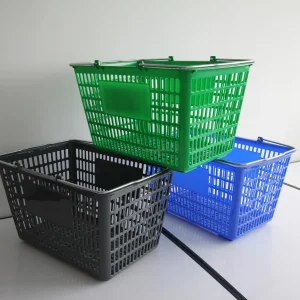
A: Yes. We can match custom colors based on Pantone or RAL codes for both plastic injection-molded components and electro-galvanized metal parts. We also offer customization for embossed or hot-stamped logos on basket panels.
Q3: How do materials hold up in cold storage and cold Canadian winter climates?
A: For shopping baskets used in cold environments, we blend our polypropylene with specialized impact modifiers. This improves elasticity at sub-zero temperatures, helping to prevent cracking and structural failure.
Q4: What testing procedures ensure the structural durability of the basket handles and caster wheels?
A: Every product batch goes through systematic quality testing. This includes drop testing with max weight capacity, cyclic handle tension tests up to 10,000 cycles, and rolling tests on abrasive surfaces to ensure the long-term performance of the casters.
Q5: What is the Minimum Order Quantity (MOQ) for custom manufacturing runs?
A: Standard color baskets have an MOQ starting at 500 units. For fully customized colors or specialized designs requiring dedicated mold configurations, the MOQ is 1,000 units.